
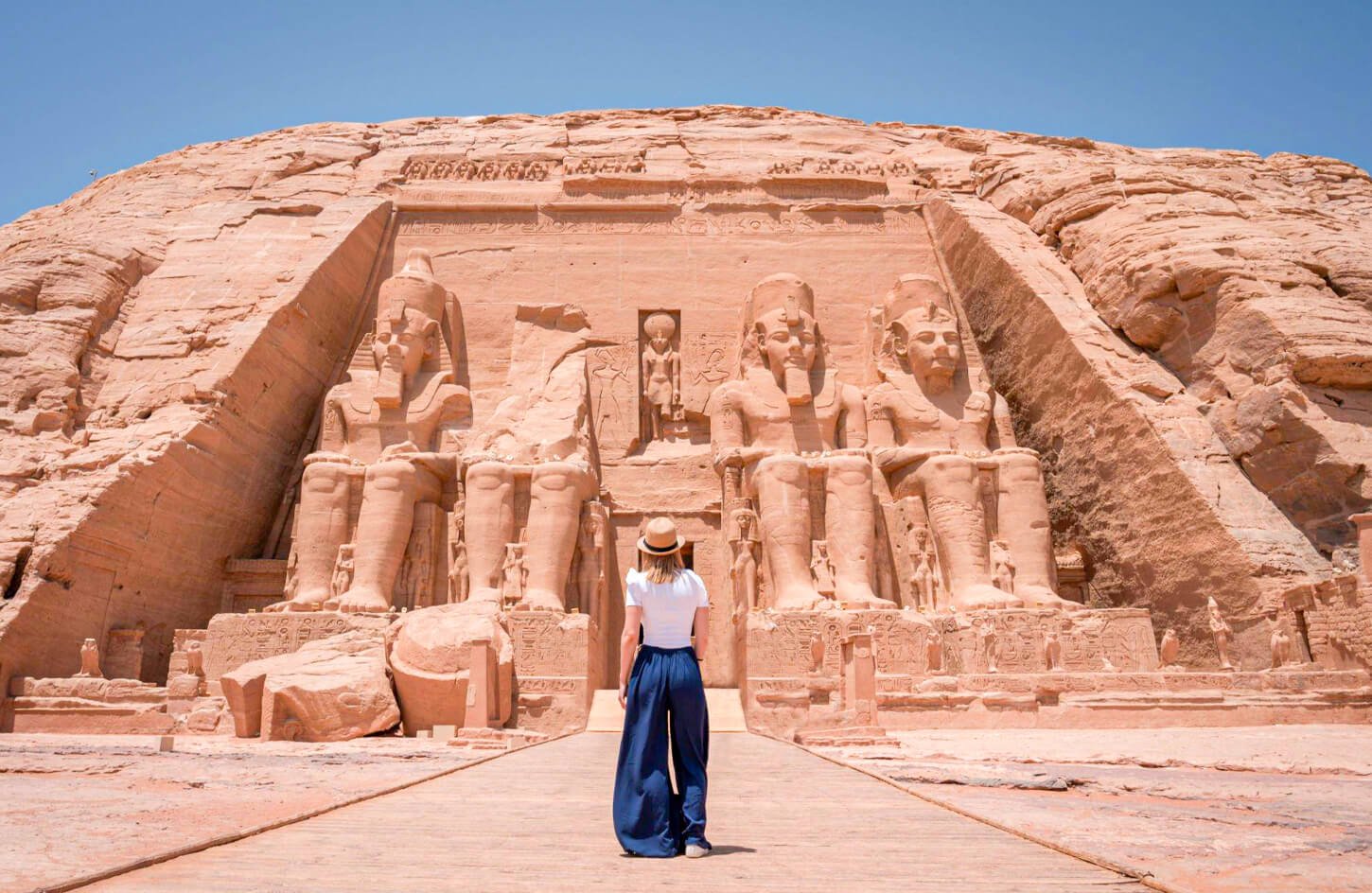

You’re about to start a journey to one of Egypt’s most amazing sites. The Great Temple of Ramesses II is a wonder that has lasted since the 13th century BC.
It’s in the village of Abu Simbel, Aswan Governorate, Upper Egypt. This huge temple carved into the mountain shows ancient Egyptian skill and creativity. As you see this famous site, you’ll learn about its history and importance.
Find out why this place is a top spot for travelers and history fans. Get ready to dive into the deep culture of Egyptian temples.
The Historical Significance of Abu Simbel
Exploring Abu Simbel reveals its deep history. It was built during Ramesses II’s reign. The construction began around 1264 BC and took 20 years.
It was dedicated to gods Amun, Ra-Horakhty, and Ptah. It also honored Ramesses II, who was seen as a god.
Political Statements in Stone
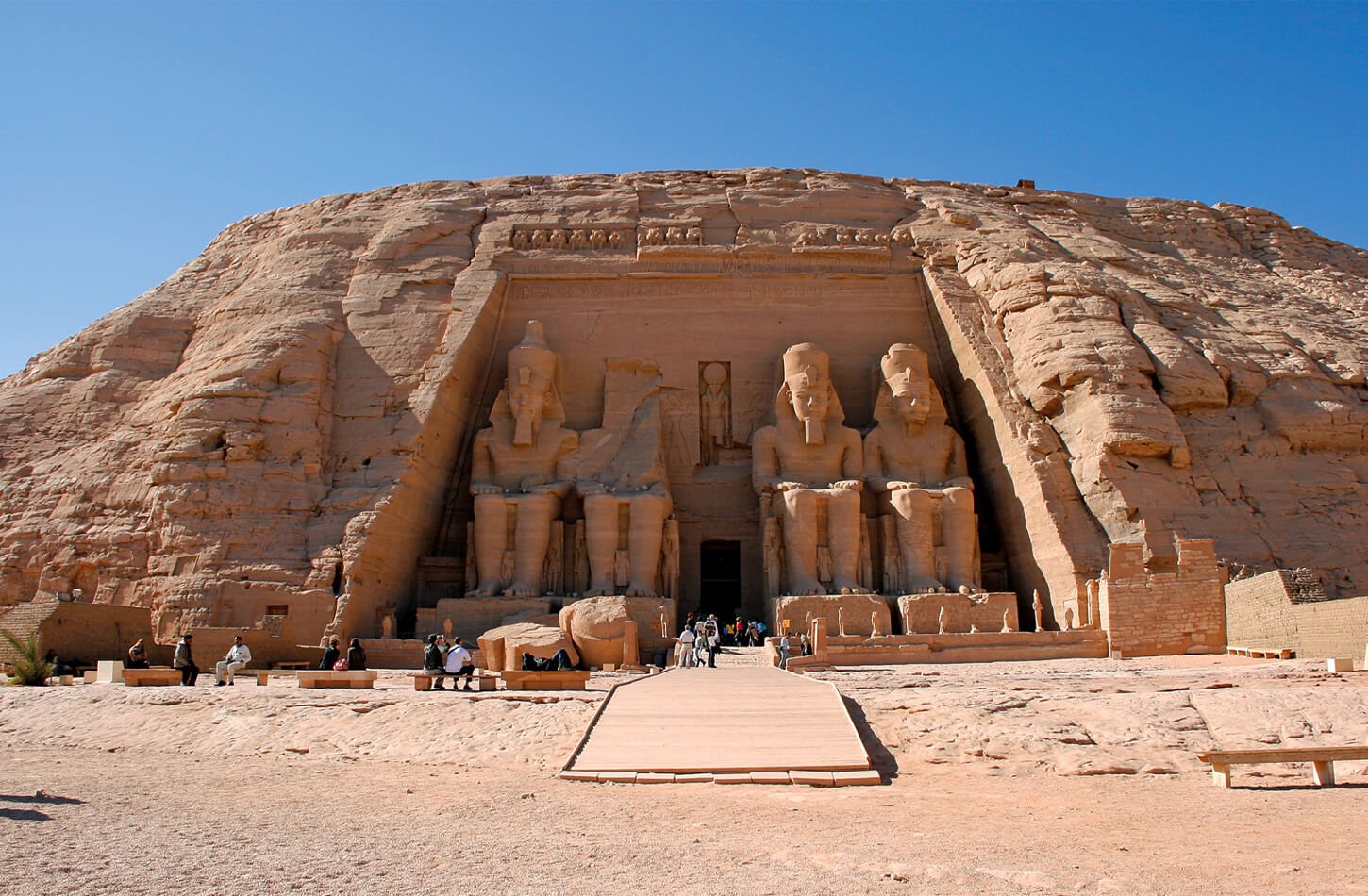
The Great Temple’s facade shows four huge statues of Ramesses II. It’s a political statement in stone. It shows the pharaoh’s power and strength.
This architecture was meant to impress and scare. It showed Ramesses II’s power to other kingdoms and his people.
Religious Significance
Abu Simbel holds great religious value. It was dedicated to many Egyptian gods and Ramesses II. The temple shows the ancient Egyptians’ beliefs and gods.
The temples of Abu Simbel show ancient Egypt’s rich history. They give us a peek into the politics and beliefs of that time.
The Remarkable Story of Abu Simbel’s Relocation
The Aswan High Dam’s construction in the 1960s needed a big move. The ancient temples of Abu Simbel were in danger. A UNESCO-led international campaign saved these treasures.
From 1964 to 1968, a team moved the temples to safer ground. They worked hard to make it happen.
The Cutting Process
The temples were cut into big blocks, up to 30 tons each. This archaeological engineering was very precise and slow. They had to take apart and prepare the blocks for moving.
Reassembly on Higher Ground
The blocks were moved 65 meters up. This saved the temples from being lost underwater. It showed how people can work together and be creative.
The Abu Simbel move is a great example of teamwork and archaeological engineering. Now, people from everywhere can see these amazing temples. Thanks to UNESCO and the world’s help.
Planning Your Visit to Abu Simbel
Abu Simbel needs careful planning, from how to get there to photography rules. Knowing your options for transportation is key to a great visit.
You can fly into Abu Simbel Airport or take a day trip from Aswan. Flights are quick and scenic. Land tours let you see more of the area.
After arriving, think about your photography plans. Photography inside the temples is allowed with a cellular phone. But, other devices need photography passes. This is crucial for capturing the temples’ beauty.
Photography Passes
To use cameras or other devices, you need a photography pass. This pass lets you take photos freely. It ensures you can fully document your visit.
Guide Services
Getting a guide service makes your visit better. Guides share the temples’ history and importance. They help you understand and enjoy the site more.
Plan well and know what you need for Abu Simbel. This way, your visit will be rewarding and unforgettable at Egypt’s iconic site.
How to Get to Abu Simbel
Getting to Abu Simbel is exciting, with options like flying or a scenic drive. The temples are in a remote part of Egypt. But, there are easy ways to get there from Aswan.
Convoy System and Timing
Many people travel to Abu Simbel on a guided tour from Aswan. This means joining a group for safety. The drive is about 290 km and takes 2.5 to 3 hours.
The convoy system is well-organized. It makes sure you arrive at Abu Simbel comfortably.
The convoy system is not only practical but also a great way to meet others. Remember, the timing of these convoys can change. Always check with your tour operator for the latest info.
Private Transportation Options
If you want a personal experience, private transport is available. You can choose a car or minibus from Aswan. This gives you flexibility in timing and stops.
Or, you can fly from Aswan to Abu Simbel. Flights take about 45 minutes. This way, you see the temples quickly without a long drive. No matter how you travel, the trip to Abu Simbel is memorable.
Accommodation Options Near Abu Simbel
Choosing the right place to stay near Abu Simbel can make your trip better. Many people go on day trips from Aswan. But, there are also places to stay overnight close to the temples.
The Abu Simbel Hotel is a good choice for staying overnight. It’s right next to the temples. This means you can see the sunrise or sunset without the crowds of day trips.
Recommended Hotels for Day Trips
If you’re going on a day trip, Aswan has many hotels. They offer packages that include going to Abu Simbel. These hotels also have guided tours and other services to make your visit better.
Whether you stay overnight near Abu Simbel or take a day trip from Aswan, book your hotel early. This is very important, even more so during busy times. The right hotel can make your Abu Simbel trip unforgettable.
Step-by-Step Tour of the Great Temple of Abu Simbel
Your visit to the Great Temple of Abu Simbel is unforgettable. It has huge statues and a special solar alignment. The four giant statues of Ramesses II at the entrance are impressive.
Inside, you’ll see the hypostyle hall. It’s filled with detailed carvings and hieroglyphics. These tell stories of Ramesses II’s victories.
Dates of the Solar Event
The Great Temple of Abu Simbel is famous for its solar alignment. This happens twice a year. On February 22 and October 22, the sun shines on the statues.
What Happens During Alignment
When the sun rises, its rays go through the temple. They light up the statues of Ptah, Amun, Ramesses II, and Ra-Horakhty. This shows the ancient Egyptians’ knowledge of astronomy and architecture.
Seeing this is special. You’ll feel the desert’s quiet. The solar alignment is a key part of visiting Abu Simbel. It’s a unique experience.
Exploring the Temple of Hathor
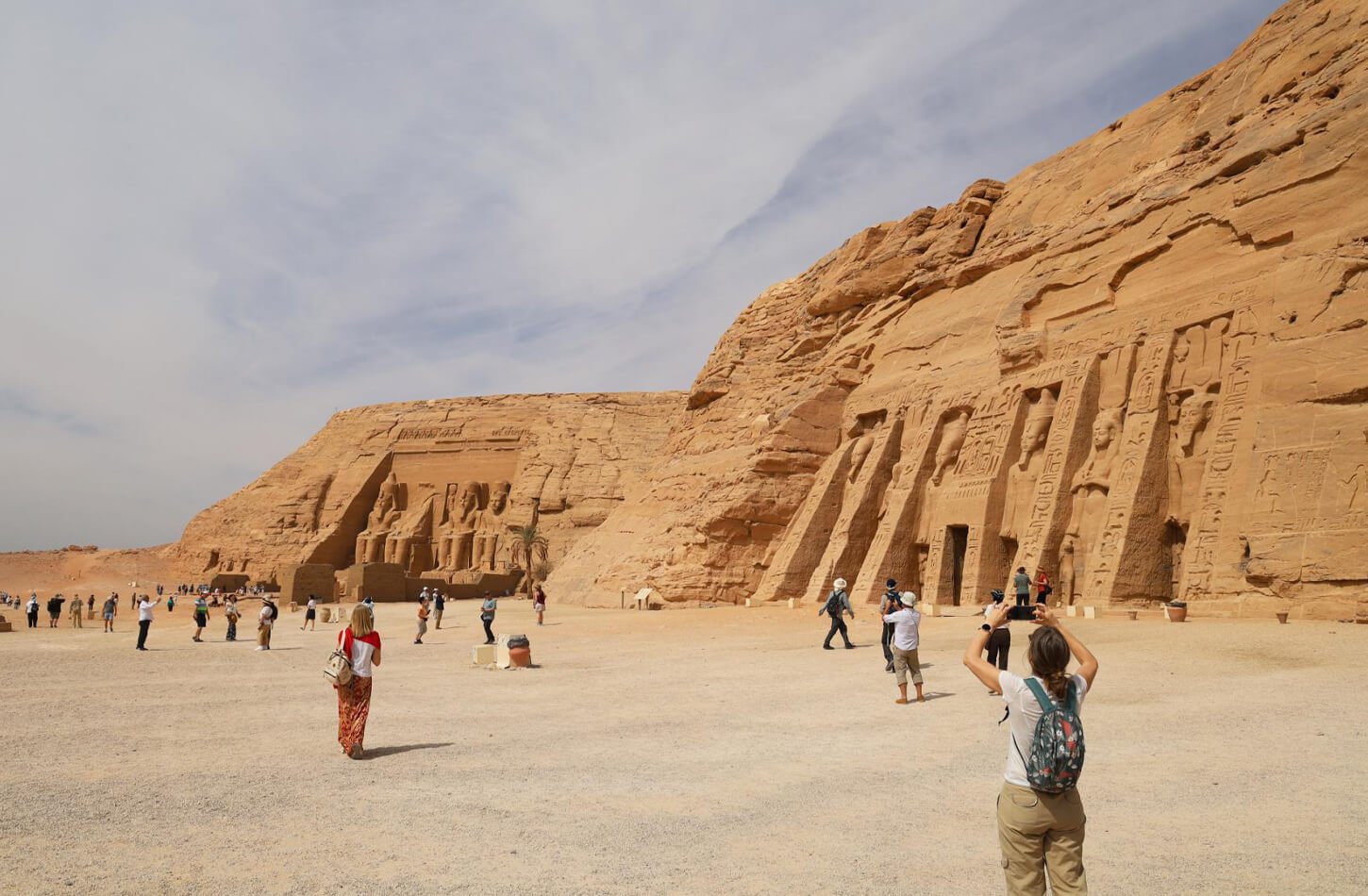
The Temple of Hathor is a small but beautiful monument. It shows Ramesses II’s love for his wife, Nefertari. This temple is dedicated to Nefertari and the goddess Hathor. It gives us a glimpse into the lives of Ramesses II and his queen.
The Temple’s Architecture: The facade of the Temple of Hathor has statues of Nefertari and Ramesses II. This shows they were seen as equals. It highlights Nefertari’s importance in Ramesses II’s reign.
Comparing with the Great Temple
The Great Temple of Ramesses II is famous for its huge statues and grand size. But the Temple of Hathor is special for its detailed carvings and statues of Nefertari and Ramesses II. Both temples celebrate Ramesses II’s glory and his reign’s significance.
Unique Aspects: The Temple of Hathor is smaller than the Great Temple. Yet, it’s just as captivating with its stunning facade and historical value. Visiting this temple gives us a closer look at Nefertari’s role and the worship of Hathor back then.
Exploring the Temple of Hathor is more than seeing ancient architecture. It’s a journey through history that shows us the culture and beliefs of the time. The temple reminds us of the rich heritage and stories these ancient structures hold.
Photography Tips for Capturing Abu Simbel
Abu Simbel is a photographer’s dream. It has huge statues and detailed carvings. But, to get the best shots, you need to plan.
The early morning and late afternoon are the best times. The soft, golden light makes the temple’s textures and colors pop. Don’t forget a tripod for the low light.
Remember, only phones are allowed inside without a special pass. So, plan ahead if you want to use a camera. Focus on the details and the statues’ size to capture Abu Simbel’s essence.
Follow these photography tips and pay attention to the lighting and equipment rules. This way, you’ll capture Abu Simbel’s beauty and history, making your visit unforgettable.
Cultural Etiquette When Visiting Egyptian Temples
When you visit Egyptian temples like Abu Simbel, knowing the cultural etiquette is key. It makes your visit respectful and enriching. Be mindful of your clothes, behavior, and how you interact with the temple.
Dress modestly by covering your shoulders and knees. This shows respect. Also, remove your shoes before entering some parts of the temple. Choose shoes that are easy to take off and put back on.
Avoid touching the ancient structures or statues. The oils from your skin can harm them. By following these simple rules, you help keep the temples safe for the future. And you’ll have a more meaningful visit.
Combining Abu Simbel with Other Egyptian Attractions
Visiting Egypt? Think about seeing Abu Simbel and other famous spots. You might want to see Aswan, Luxor, and Cairo too. It’s important to plan how you’ll get around and how long to stay at each place.
Transportation Connections
Getting from Abu Simbel to other places is easy. You can fly, take a train, or join a guided tour. Flights are the fastest way to get around, with many flights to Aswan and Luxor. Trains are slower but offer a nice ride. Tours usually include travel, making it easy for you.
Time Requirements
Make sure you have enough time for each spot. Abu Simbel needs a whole day to see, including travel. Aswan and Luxor should get a few days each to really get into their history. This way, you can enjoy Egypt’s history without rushing.
When you plan to see Abu Simbel and other places, think about travel times. For example, going from Luxor to Abu Simbel takes hours by car or a quick flight. Plan well to enjoy your trip without stress.
Conclusion: The Enduring Wonder of Abu Simbel
Abu Simbel is a top wonder in Egypt, drawing many visitors. It’s not just about seeing old buildings. It’s about diving into ancient Egypt’s culture.
Visiting Abu Simbel is a must for history buffs and those who love ancient sites. The Abu Simbel temples show the ancient Egyptian legacy. They remind us of a time of grandeur and power.
Make sure Abu Simbel is on your Egypt trip list. The enduring wonder of Abu Simbel will give you memories to cherish. Its importance will stay with you even after you leave.
0 Comment